- "ELECTRICIAN SINCE 2014"
- "TECL #30865"
- info@topnotchelectrician.com
- 324 W US Hwy 82, Sherman, TX 75092

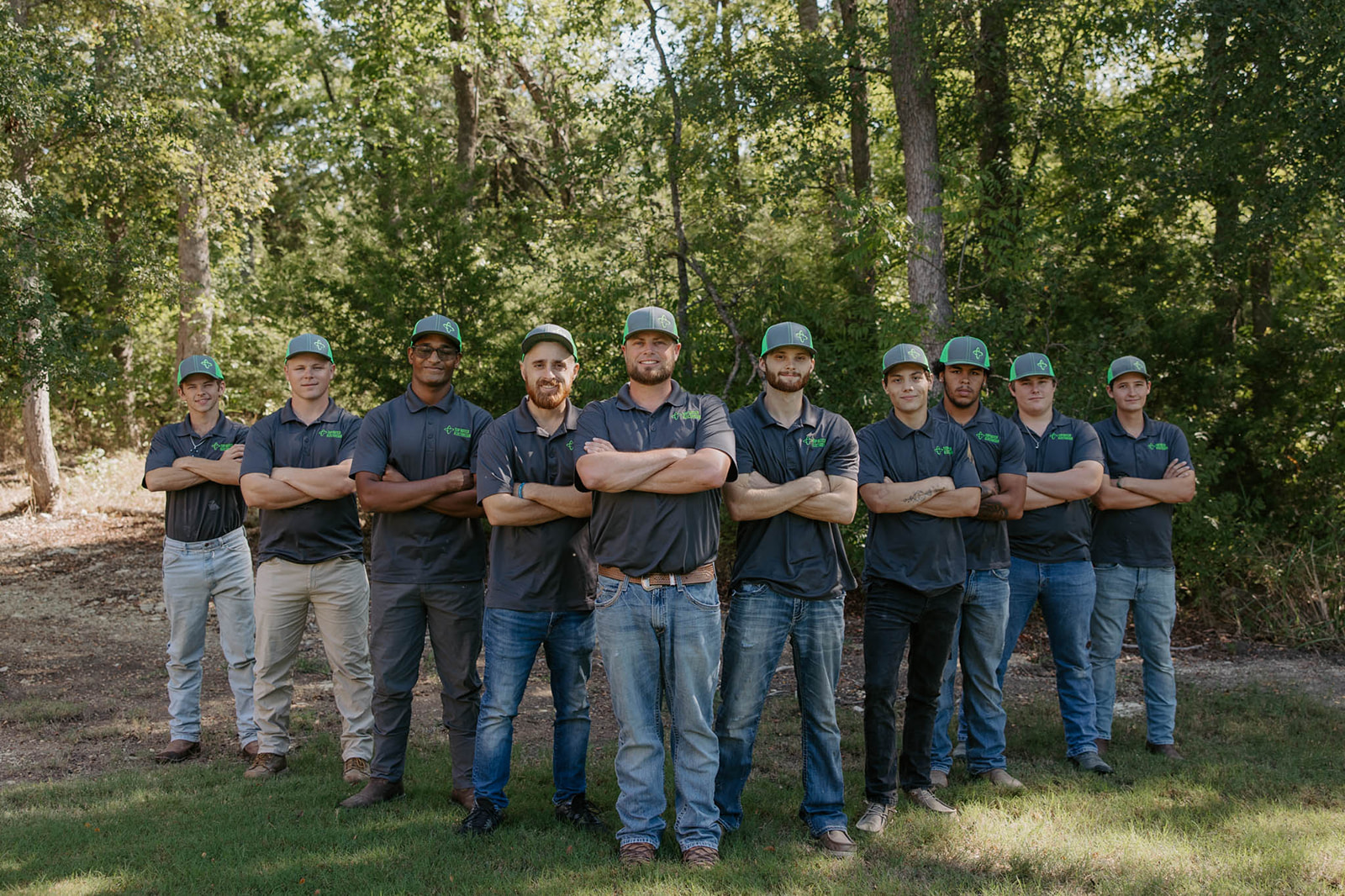
One lightning strike or a single grid spike can fry every appliance, TV, and circuit board in your home — in under a millisecond. A properly installed whole house surge protector stops that surge at your electrical panel before it ever reaches what you own. Top Notch Electrician installs them right, the first time, for a flat price.
It is not a power strip. It is not the little plug-in unit you buy at the hardware store. A whole-house surge protector is a wired device, installed by a licensed electrician inside your home's main electrical panel — where every wire in your house begins.
Watch the short clip to see exactly where it goes, how compact it is, and why every modern home with HVAC, electronics, or smart appliances should have one.
Every modern home runs on around 120 volts. Sometimes — because of lightning, a downed power line, a transformer hiccup, or even the AC unit kicking on next door — that voltage spikes up to 6,000 volts or higher for a fraction of a second. That spike is called a power surge.
Most appliances and electronics are not built to take it. A whole house surge protector is a small, hard-wired device installed inside your breaker panel. When a spike comes through your power lines, the protector grounds the extra voltage before it reaches your wiring, your outlets, or anything plugged into them.
It is the difference between losing a $30 surge strip and losing a $4,000 HVAC compressor.
Protects whatever is plugged into that one strip. Does nothing for your HVAC, dishwasher, fridge, water heater, or anything hard-wired.
Installed at the panel. Protects every wire, every outlet, every appliance — including the ones with circuit boards you cannot easily replace.
Most homeowners think surge protection is about lightning strikes. Lightning is the dramatic one, but it is far from the most common cause of surge damage. Your home is actually getting hit by smaller, repeated surges every single day — and they are quietly degrading every circuit board you own.
A direct or nearby strike can push 100,000+ volts through your utility line. North Texas averages 25 thunderstorm days a year — and one cloud-to-ground strike within a mile can fry every electronic in the house.
When Oncor or CoServ switches loads, fixes a transformer, or restores power after an outage, the resulting spike often exceeds 6,000 volts. These happen far more often than lightning, and you never see them coming.
Up to 80% of surges in a typical home come from inside it. Every time your HVAC compressor, well pump, fridge, or pool equipment cycles on and off, it creates a small surge that travels through your wiring.
A sag — when voltage temporarily drops — is followed by a snap-back surge as the grid recovers. Brownouts are especially common in Texas summers when the grid is under heavy AC load.
A car hitting a utility pole, a tree limb dropping a wire, or a construction accident can send the full 7,200V primary line voltage into your neighborhood's secondary lines — directly into your panel.
Modern Level 2 EV chargers and solar inverters dramatically increase a home's switching events. Without surge protection, you are adding new high-current cycling to wiring that was never designed for it.
Of household surges originate inside your own home — from appliances cycling on and off. Lightning gets the headlines, but it is the small, daily surges that quietly shorten the life of every electronic device you own.
Real surge protection is layered. Industry standards (NEC and UL 1449) recognize three types of surge protective devices — each one catches what the others miss. Here is the plain-English version.
Installed: At the meter, before your panel
Built to handle the biggest surges — direct lightning and utility line strikes. Mounted outside your home between the meter and main breaker. Less common in residential, but the gold standard for homes with overhead lines or storm exposure.
Installed: Inside your breaker panel
The standard whole-house surge protector. Mounted to a two-pole breaker space inside your main electrical panel. This is what we install for almost every home in North Texas — it protects every circuit at once and stops 80–90% of all surges.
Installed: At the outlet
Point-of-use protection — quality surge strips and wall outlets that catch whatever small surges slip past the panel. Used in addition to Type 2, never instead of it. Best for your home theater, computer, and any device with a sensitive circuit board.
This is what your home actually contains in 2026. Without panel-level surge protection, every one of these items is exposed to the full voltage of whatever comes down the line.
A typical North Texas home now carries $15,000 to $40,000 of surge-vulnerable equipment behind every outlet. A whole-house surge protector install runs a tiny fraction of that — and it covers all of it, every day, for the life of the device.
A surge protector install is fast — but it has to be done right. The device has to be matched to your service size, sized to your panel, and wired with the shortest possible lead length. Here is what we handle on every install.
Before we install, we open your panel and check for available breaker space, panel condition, grounding, and any code issues. No surprises after we start.
We match the surge protector's kA rating, voltage rating, and clamping voltage to your specific service — not a one-size-fits-all device.
We install only UL-listed Type 2 surge protective devices that meet the current UL 1449 standard — the spec your insurance company looks for.
Surge protectors only work as well as their wire length allows. We wire with the shortest possible leads to your bus bar — the way the manufacturer specifies.
If your jurisdiction requires a permit, we pull it. Every install meets NEC Article 285 and your local Texas amendments.
Before we leave, we energize the device, verify the LED status indicators, confirm grounding continuity, and label the breaker so you know exactly what it does.
We register the device with the manufacturer so the connected-equipment warranty (often $25,000 to $75,000) is active from day one.
Every Top Notch install carries our standard labor warranty. If anything we touched fails, we come back at no charge — that simple.
No high-pressure sales. No vague estimates. Here is exactly what happens when you book a whole-house surge protector install with Top Notch.
Tell us your panel brand, your home's size, and any concerns. We give you a clear flat-rate quote on the call — most surge protector installs are straightforward.
When we arrive, we open the panel, confirm available space and grounding, and walk you through what we are about to install before any work starts.
Power is safely shut off at the main. The Type 2 SPD is mounted, wired with short leads to the bus, breakered, and labeled. Total downtime: usually under 30 minutes.
Power back on. We verify the indicator lights, register the warranty for you, and walk you through how to check the device and what to do if it ever trips.
Speak directly with a licensed master electrician. No call center, no upsells, no surprises. Most surge protector installs in Sherman, McKinney, Frisco and surrounding cities can be scheduled within 2 to 5 business days.
The honest answer most contractors will not give you: whole house surge protector installation cost in North Texas typically runs between $400 and $1,200 fully installed, depending on the device chosen and your panel's condition.
The device itself ranges from about $150 (entry-level UL 1449 Type 2) to $600+ (commercial-grade Type 2 with surge counters and higher kA ratings). Labor on a clean panel with available breaker space is usually 1 to 2 hours.
Three things move the price up: panel modifications, code-required grounding upgrades, and choosing a higher-tier device with a larger manufacturer-connected-equipment warranty. We tell you exactly which tier you need and why.
UL 1449 listed, 40 kA per phase, basic LED status indicators, manufacturer warranty up to $25,000 connected equipment. Ideal for most homes with average electronics load.
50–70 kA per phase, audible alarm, longer thermal protection, $50,000+ connected-equipment warranty. Best choice for homes with HVAC, EV chargers, smart home systems.
Type 1 device at the meter plus Type 2 at the panel. Maximum protection for homes with overhead service, frequent storms, or high-value equipment (solar, EV, server rooms).
Pricing is for typical Sherman / Grayson / Collin County residential installs with a serviceable panel. We provide a flat written quote before any work begins — no hourly billing, no surprise add-ons.
Top Notch Electrician serves homeowners throughout Grayson, Collin, Denton, and Fannin Counties. If your city is not listed, give us a call — we travel.
Top Notch Electrician has been serving Sherman, McKinney, and the surrounding cities since 2014. We are a licensed, family-run electrical contractor — not a national chain — and we treat every panel like it is in our own home.
TECL #30865. Every install is performed or directly supervised by a Texas-licensed master electrician — not a trainee, not a subcontractor.
We live and work in North Texas. We know which neighborhoods have overhead service, which utility companies feed which streets, and which storms historically hit hardest.
You get one written number before any work starts. That is the number you pay — no hourly creep, no surprise materials.
Most surge protector installs in our service area can be scheduled within 2 to 5 business days. Storm season we run extended hours.
North Texas averages 25 thunderstorm days a year and ranks in the top 10 states for cloud-to-ground lightning strikes. The grid here is built for growth, not for resilience.
Whole-house surge protection is not a luxury upgrade in this market — it is preventative maintenance. We install it the way the manufacturer specifies, on the panels we know, with the brands we have tested.
"After we lost a TV and a brand-new fridge to a storm last summer, I finally got serious about surge protection. Top Notch came out the next day, gave me a flat quote, and had the whole-house unit installed inside an hour. Wish I had done it years ago."
Daniel R.
McKinney, TX
"Honest. That is the word for these guys. Quoted me a fair price, explained exactly what I was getting, and did clean work in my panel. Labeled the breaker, registered the warranty, walked me through everything. No upsell on anything we did not need."
Angela K.
Sherman, TX
"Had Top Notch put in a surge protector along with my new EV charger. They explained why I really needed both — and the price was significantly better than the big national company I called first. Local, professional, and they actually answer the phone."
Marcus T.
Frisco, TX
If your home has central HVAC, a modern refrigerator, any smart appliances, a tankless water heater, an EV charger, or solar — yes. Anything with a circuit board can be ruined by a single surge. The 2020 National Electrical Code (NEC 230.67) actually requires whole-house surge protection on new and replacement residential service panels for exactly this reason.
A power strip is a Type 3 surge protector — it only protects what is plugged into it. A whole house surge protector is a Type 2 device installed inside your breaker panel, so it protects every wire, every outlet, and every hard-wired appliance in your home at the same time. The two are designed to work together, not as alternatives.
Fully installed, expect $400 to $1,200 for a standard Type 2 install on a clean panel. The device itself is $150 to $600 and labor is 1 to 2 hours. Higher-tier devices with bigger manufacturer warranties and Type 1 + Type 2 layered setups push the price toward the upper end. We give you a flat written quote before any work starts.
Directly inside your main electrical panel — the gray metal box with the breakers, usually in your garage, utility room, or outside wall. The device mounts to a two-pole breaker space and wires straight to the bus bar with the shortest possible leads. It does not go in line with your meter or in your attic.
Most whole-house surge protector installs are done in 45 to 90 minutes, including the time we shut off power, mount the device, wire it, test it, and label your panel. Total power-off time is usually under 30 minutes.
It will stop the surge that travels into your home from a nearby lightning strike — which is the cause of almost all lightning-related damage to home electronics. It is not designed to handle a direct strike to your house. For that, layered Type 1 + Type 2 + Type 3 protection plus a good grounding system gives you the best odds.
For 90% of homes in North Texas, a properly installed Type 2 surge protector at the panel is the right answer. Type 1 is added when you have overhead service, severe storm exposure, or very high-value equipment. Type 3 (point-of-use strips) is always a smart add-on for sensitive electronics like home theater, computers, and game consoles.
A quality Type 2 surge protector typically lasts 10 to 25 years in normal use. Every device has a finite number of surge "absorption" events before its internal components wear out. The LED status indicators on the front of the device will tell you when it is time to replace it — green means protected, red or off means time to call us.
The device sacrifices itself to save your home — that is exactly what it is supposed to do. After a major surge event, you will see the status LED change from green to red or off. The breaker may also trip. Power to your home continues normally. Call us, and we will swap in a new unit and process the manufacturer's connected-equipment warranty claim if any of your gear was affected.
Most Texas homeowners policies cover sudden, accidental surge damage — but with a deductible (usually $1,000 to $2,500), a slow claim process, and a real risk of premium increases or non-renewal after multiple claims. A whole house surge protector prevents the damage in the first place, and most quality SPDs come with a $25,000 to $75,000 manufacturer-paid connected-equipment warranty.
Working inside a live main electrical panel is dangerous, and most jurisdictions in Texas require a licensed electrician for any panel modification. A DIY install also voids the manufacturer's connected-equipment warranty on every quality SPD on the market. The labor cost of a professional install is small compared to what is at stake on both safety and warranty fronts.
In most cases, yes — we install surge protectors on a wide range of panels (Square D, Eaton, Siemens, GE, and others). On older Federal Pacific or Zinsco panels we will recommend a panel upgrade first, because those panels have safety issues that surge protection cannot fix. We tell you straight, on site.
A whole-house Type 2 protects your solar inverter and EV charger if they are on the same panel as the SPD. Some larger solar setups benefit from a dedicated DC-side surge protector at the array, and high-amp Level 2 EV chargers benefit from a Type 3 strip-style SPD at the device for extra coverage. We make the call after we see your setup.
Most weeks we can have a licensed electrician at your home within 2 to 5 business days for a free estimate, and the actual install scheduled within the same week. During storm season we extend hours. Call (972) 379-8646 for current availability.
Get a flat-rate, written quote on a whole house surge protector install in Sherman, McKinney, Frisco, or anywhere across North Texas. Free, no-obligation, and you talk directly to the master electrician who would do the work.